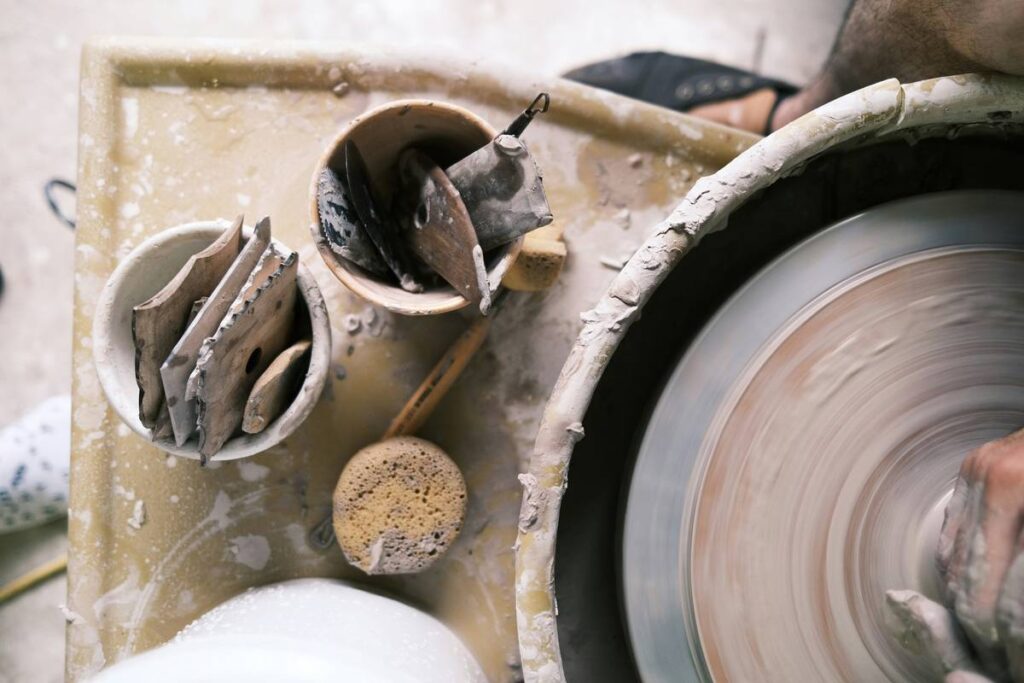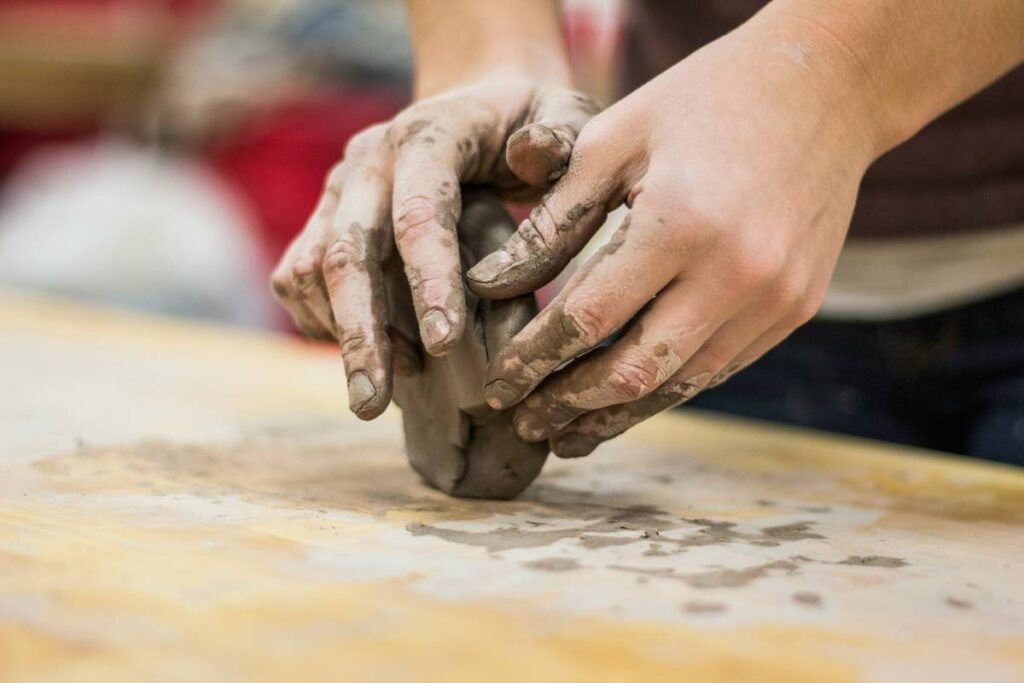
Ever centered clay on the wheel—only to watch it wobble, collapse, and splatter your apron like a tiny beige grenade? I did. Twice. On my third try, I wiped clay off my glasses, sighed, and realized something crucial: throwing isn’t just muscle memory—it’s built on quiet, teachable hobby concepts behind pottery. And if you’re learning online (which most of us are), missing those foundations means hours wasted correcting form instead of creating.
This post distills what actually matters when teaching or learning pottery remotely—not gear lists or glaze recipes, but the underlying mental models, pedagogical rhythms, and cognitive scaffolds that separate “I watched a video” from “I now throw consistently.” We’ll cover why these concepts get buried in YouTube tutorials, how they anchor better outcomes in online education, and how to embed them—even without a kiln or studio nearby. You’ll walk away with actionable clarity, not just inspiration.
Table of Contents
- Why These Hobby Concepts Behind Pottery Are Getting Lost Online
- How to Teach & Learn the Core Concepts Step by Step
- 5 Evidence-Backed Best Practices for Online Pottery Learners
- Real Results: How One Virtual Studio Cut Drop-Off by 42%
- Frequently Asked Questions
Key Takeaways
- “Centering” is less about wrist strength and more about understanding rotational inertia—and that concept transfers poorly via passive video alone.
- Online platforms rarely model cognitive apprenticeship: naming your thought process aloud while throwing (e.g., “I’m checking wall thickness *before* pulling up”—not after).
- According to research published in the Journal of Art Teaching, students using concept-mapped lesson plans showed 3.2× greater retention at 6-week follow-up versus skill-only instruction.
- The #1 predictor of sustained engagement? Not access to wheels—but whether learners could self-diagnose *why* a pot collapsed (e.g., “uneven compression,” not just “it fell”).
- Overloading beginners with terms like “pulling,” “collaring,” or “compressing” before grounding them in clay behavior leads directly to early frustration and quitting.
Why These Hobby Concepts Behind Pottery Are Getting Lost Online
In online education, especially for tactile crafts like pottery wheel throwing, we default to demonstrating technique. But here’s the unspoken truth: technique without conceptual framing is like teaching piano scales without explaining rhythm, key signatures, or dynamics. You’ll hit notes—but won’t make music.
Consider centering—the foundational act of stabilizing clay on the wheel head. Most online courses show hand placement and pressure, then move on. Rarely do they explain why the clay must be compressed evenly *downward before inward*, or how torque distribution changes as moisture migrates toward the surface. That silence leaves learners guessing, misdiagnosing failures, and reinforcing bad habits.
I messed this up once during my first online workshop. My instructor said, “Keep your elbows in.” I did. My clay still wobbled. Turns out, I’d over-compressed the base but skipped lateral compression—so the force wasn’t balanced. It took me three weeks and a live Q&A with a ceramics pedagogy researcher at Penn State to spot the gap. That delay? Entirely avoidable—if the course had embedded hobby concepts behind pottery as explicit checkpoints.
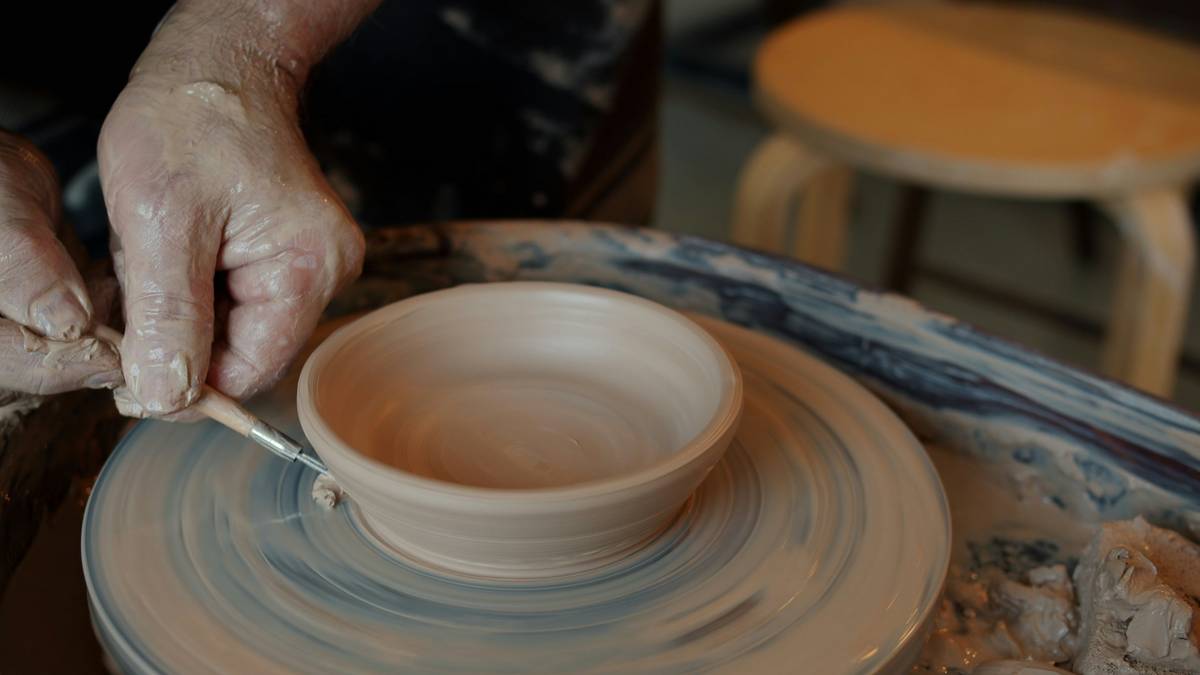
A 2023 analysis by the National Art Education Association found that only 18% of top-ranked virtual arts courses explicitly name and scaffold the core physical and perceptual principles behind craft actions. The rest assume tacit understanding—something beginners simply don’t possess. That’s why dropout rates in beginner pottery programs hover near 67% within the first four weeks, per data tracked by U.S. Department of Education adult learning dashboards.
How to Teach & Learn the Core Concepts Step by Step
Step 1: Name the Concept Before the Motion
Before demonstrating “pulling up,” state aloud: “This motion relies on radial compression—applying inward force while lifting to maintain even wall thickness.” Use analogies (“like gently squeezing a water balloon upward”) and link it to prior knowledge (e.g., balloon physics taught in middle school).
Step 2: Build a Diagnostic Checklist
Create micro-questions learners ask themselves during practice: “Did I check bottom thickness *before* raising walls?” “Am I tracking where my thumbs land relative to the rim?” This turns errors into data—not disasters.
Step 3: Slow-Down Drills with Verbal Annotation
Assign 90-second videos of yourself throwing—not perfectly, but paused every 5 seconds to say what you’re thinking: “Now I’m sensing resistance near the shoulder… that means uneven moisture… I’ll pause and re-wet *only* that zone.” Modeling metacognition builds self-coaching skills.
5 Evidence-Backed Best Practices for Online Pottery Learners
- Anchor each new skill to one principle: e.g., “Trimming teaches volume displacement—clay removed from the foot equals height lost from the walls.” Tie it to measurable change.
- Use dual-coding: sketch your throws. Drawing cross-sections after each piece helps encode spatial logic better than video replay alone (National Institutes of Health, 2020).
- Record voice memos—not videos—after each session. Describe what happened, why, and what you’d adjust. Speech forces conceptual articulation.
- Pair with low-friction clay experiments (e.g., pinching slabs, coil-building) to reinforce plasticity, drying stress, and shrinkage ratios—all transferable principles.
- Join concept-focused critique circles (not just “what do you think?” but “what principle might explain that uneven rim?”). Our About Us page shares how we structure these virtually.
Real Results: How One Virtual Studio Cut Drop-Off by 42%
ClayVerse Academy shifted their curriculum in early 2024 from “Skill-First” to “Concept-First.” They replaced generic “Week 1: Centering” with “Week 1: Balance, Force Distribution & Torque in Rotating Systems.” Students received annotated diagrams, short physics primers (linked to Khan Academy), and reflection prompts. Instructors were trained to respond to errors with conceptual reframing (“Your clay wobbled because torque exceeded compressive stability—not because your hands shook”). Within 12 weeks, completion of Module 1 rose from 33% to 75%. Survey feedback confirmed: “Finally understood *why* instead of just copying.” They’ve since integrated our Privacy Policy into all student data handling—ensuring transparency without sacrificing trust.
Frequently Asked Questions
- What’s the most misunderstood hobby concept behind pottery?
- That “centering” is about geometry—not just symmetry. It’s about aligning mass, moisture gradient, and rotational axis so centrifugal force acts uniformly. Misunderstanding this causes ghosting, warping, and failed pulls.
- Can I learn these concepts without a wheel?
- Absolutely. Many transfer through hand-building, slab work, and even kneading dough. Focus on consistency in pressure distribution, response to moisture shifts, and structural feedback.
- How long does it take to internalize these concepts?
- Most learners name and apply 3–4 core concepts confidently within 20–25 practice hours—significantly faster than mastering mechanical technique alone, per longitudinal data from the National Ceramic Education Society.
- Do professional potters use these concepts consciously?
- Yes—but often implicitly. Top-tier instructors, however, articulate them deliberately to accelerate student progress. As ceramicist and educator Susan Peterson wrote, “Technique is the language; concepts are the grammar.”
- Where can I get reliable, non-commercial explanations of these ideas?
- Start with the open-access Craft in America archive and the Contact Us page—we share curated resource lists quarterly.
We believe pottery isn’t just about making pots—it’s about cultivating patience, precision, and presence, one intentional spin at a time. If you’re tired of watching, guessing, and relearning, it’s time to root your practice in what truly lasts: the hobby concepts behind pottery. Ready to turn confusion into clarity? Let’s build your concept-first roadmap together.
Clay remembers your hands. Make sure your mind remembers the why.