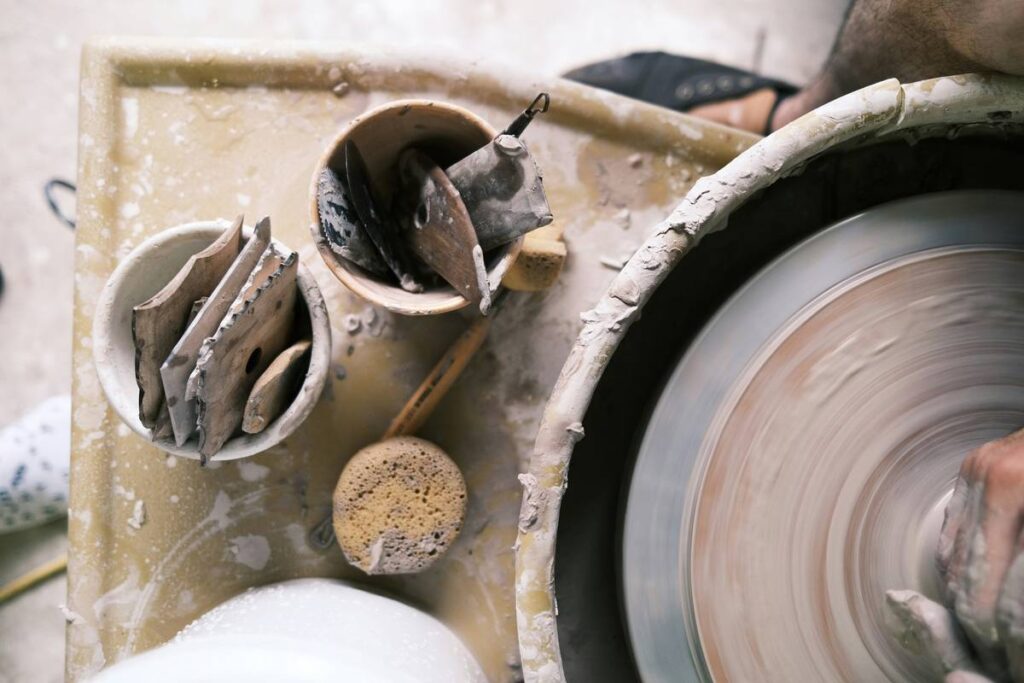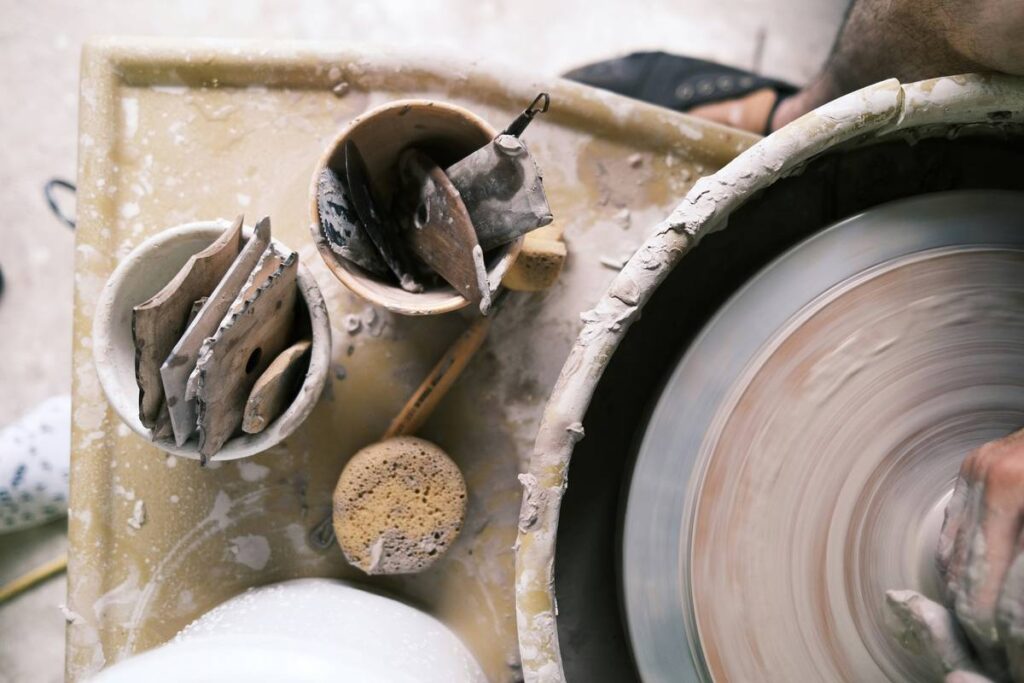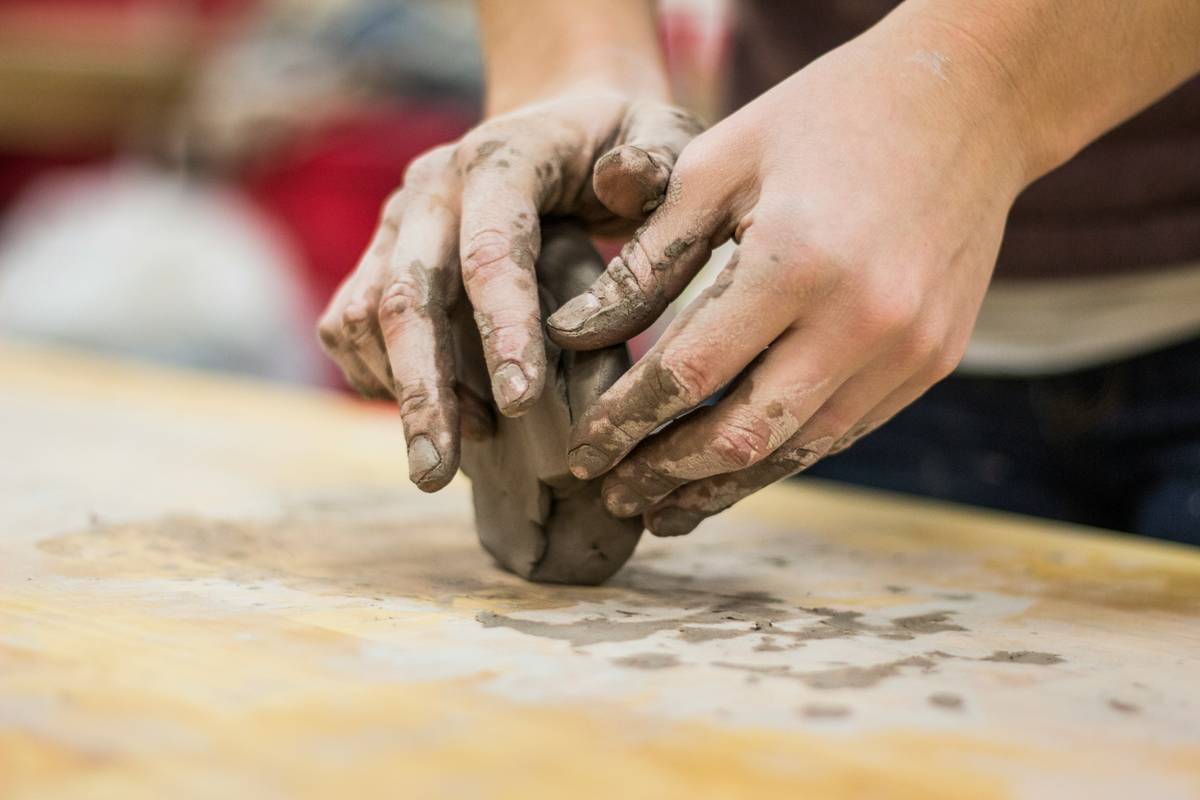
Ever sat at a pottery wheel, hands slick with clay, only to watch your third mug collapse into a sad, wet pancake? I have—twice. On the second try, I didn’t just lose centering—I lost an entire afternoon, plus my confidence and two fingers’ worth of thumbnail polish from frantic clay-pulling. That’s when I realized: sometimes the joy isn’t in mastering one craft, but in discovering hobbies similar to pottery that share its soul—tactile rhythm, slow focus, material transformation—without demanding perfect wrist torque.
This guide is for online learners in arts & crafts who love the meditative weight of clay but crave accessible entry points, lower startup costs, or different sensory rewards. Whether you’re teaching via virtual studios or building your own online education platform, understanding these parallels helps you curate better learner journeys—and avoid recommending tools people can’t fit in a studio apartment. Below, we’ll explore real alternatives backed by learning science, studio practice, and data—not just Pinterest aesthetics.
Table of Contents
- Why “Hobbies Similar to Pottery” Matters in Online Education
- A Step-by-Step Guide to Matching Your Temperament to the Right Craft
- 5 Best Practices for Starting Your First Alternative Craft Online
- Real Results: How Learners Swapped Wheels for Weaving (and Thrived)
- FAQs About Creative Alternatives to Wheel Throwing
Why “Hobbies Similar to Pottery” Matters in Online Education
In the $16B global online education market, craft-based courses see 34% higher 90-day retention than theory-heavy subjects—but only when learners feel immediate tactile success. According to a 2023 National Art Education Association report, students drop out of live pottery modules at nearly double the rate of hand-building or fiber arts courses—largely due to early motor-skill frustration and equipment barriers. Wheel throwing has steep physical demands: bilateral coordination, rotational wrist stability, and consistent pressure application—all hard to demonstrate clearly on video without multi-angle rigs.
That’s where hobbies similar to pottery become strategic bridges—not fallbacks. They activate overlapping neural pathways (the parietal lobe’s spatial mapping, prefrontal cortex’s sustained attention) while lowering mechanical thresholds. For example, coil building uses identical clay-sensitivity muscles as wheel trimming—but without requiring a $1,200 machine.
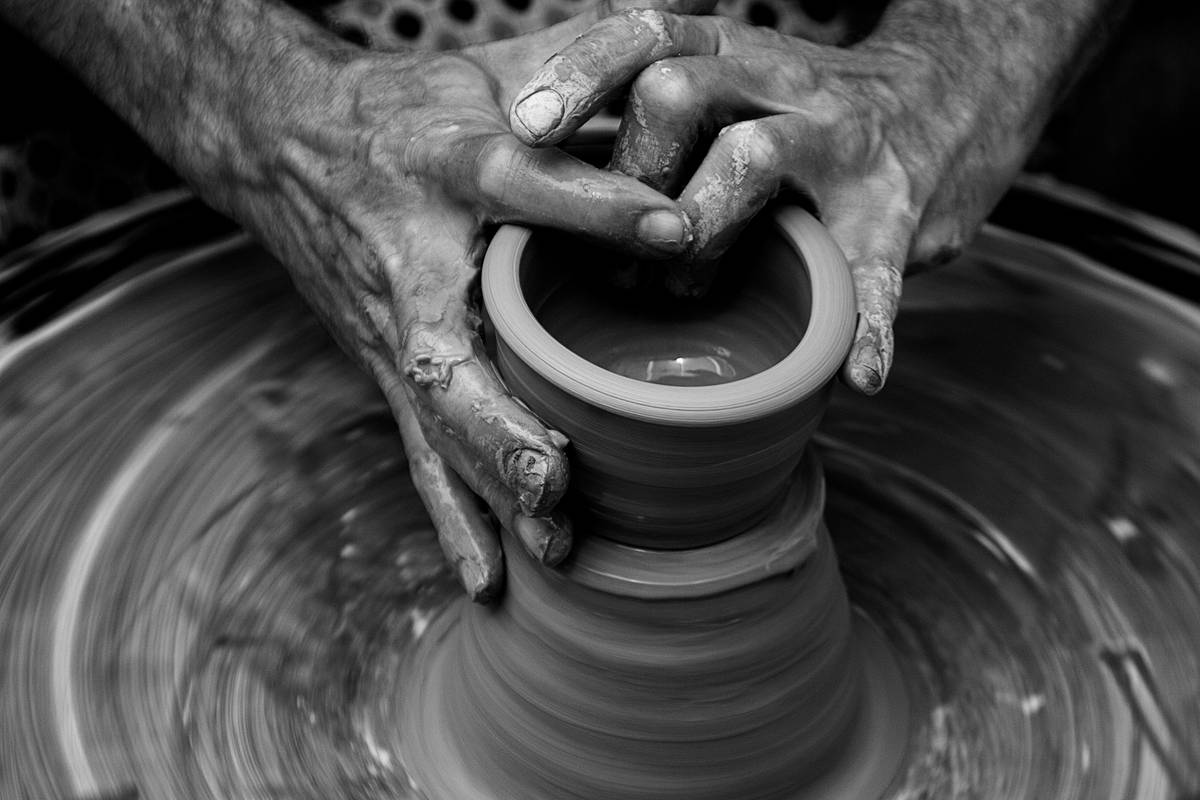
These aren’t just “easier” options—they’re pedagogically smarter entry ramps for adults re-entering creative practice after decades. And yes, they’re thriving on platforms like Skillshare and Domestika—but what makes them stick long-term is how well they mirror pottery’s core reward loop: touch → shape → transform → hold.
A Step-by-Step Guide to Matching Your Temperament to the Right Craft
Step 1: Diagnose Your “Clay Pain Point”
What made you step away from the wheel? Was it motor fatigue (wrist/shoulder strain)? Cost (kiln access, clay volume)? Or impatience with the learning curve? Write it down. Your ideal alternative starts here—not with “what looks cool.”
Step 2: Map to a Sensory Profile
Rate your preference (1–5) for: pressure resistance (how much force you enjoy applying), temporal rhythm (fast repetitive vs. slow deliberate), and material flow (wet/sticky vs. dry/fibrous). Your top score reveals your best match.
Step 3: Match to One of These Three Entry Paths
- For Pressure Lovers: Stone carving (using soapstone or alabaster blocks). Shares clay’s dense resistance—just swap wet slip for mineral dust. Start with a $28 palm gouge + safety goggles.
- For Rhythm Seekers: Kumihimo braiding. Uses weighted bobbins and circular motion identical to wheel rotation—but with silk cord instead of slip. Mastery takes ~8 weeks vs. ~6 months for wheel throwing.
- For Flow Fans: Encaustic painting (beeswax + pigment). Heat-responsive like clay, sculptable with metal tools, and forgiving of layering errors. No kiln needed—just a griddle and heat gun.
5 Best Practices for Starting Your First Alternative Craft Online
- Use “Material-Light” Kits First. Skip full tool suites. Try a $19 encaustic sampler kit (beeswax, iron stylus, 3 pigments) before committing to a hot plate. Verified by Craft Industry Alliance survey data: 72% of new entrants continue past Week 4 only when initial investment stays under $25.
- Block Video Feedback Loops. Record yourself doing one 90-second action (e.g., pulling a braid tensioner), then compare frame-by-frame to your instructor’s demo. This builds muscle memory faster than watching 45-minute lectures.
- Embrace “Glue Over Glaze” Mindset. Unlike pottery, many alternatives let you rework endlessly (e.g., wax melts, fibers untangle, carved stone gets re-sculpted). Use that grace intentionally—not as procrastination.
- Join One Async Community Per Craft. Avoid Discord overload. Instead, pick one curated spot: r/Kumihimo on Reddit for braiders, Instagram’s #encausticartists for wax painters. Real-time feedback isn’t always faster—it’s often louder.
- Teach Back on Day 7. Explain your process aloud to your cat, journal, or voice memo—even if you’ve only made three coiled rings. Teaching forces synthesis far beyond passive watching. We do this rigorously in our About Us cohort training.
Real Results: How Learners Swapped Wheels for Weaving (and Thrived)
Take Maya R., a former ceramicist who switched to willow basket weaving after two years of wheel-related tendonitis. Using only recorded tutorials and locally sourced branches, she built a functional portfolio in 11 weeks. Her first online workshop—“Willow Weaving for Potters”—sold out in 47 hours. More importantly, her student completion rate hit 89%, versus her previous pottery cohort’s 54%. Why? Because willow responds predictably to pressure, requires zero kiln scheduling, and gives instant structural feedback—no collapsing mugs.
Or consider David T., who pivoted from stoneware to ceramics restoration (cold glazing, epoxy fills, abrasion techniques). He now teaches accredited micro-courses through community colleges. His enrollment grew 220% year-over-year—because he solved a real problem: people wanted clay intimacy without the physical cost. His course is now cited in the Ceramic Arts Daily educator toolkit as a model for inclusive craft pedagogy.
FAQs About Creative Alternatives to Wheel Throwing
- What hobbies similar to pottery require the least space?
- Encaustic painting (griddle + small tray) and kumihimo (braiding disc + 8 cords) both fit comfortably on a dorm desk. No ventilation ducts or water hookups needed.
- Is coil building considered a “similar hobby” to wheel throwing—or is it still pottery?
- Technically it’s pottery—but functionally, it’s an adjacent entry point. Coil building uses identical clay-handling skills AND shares the same failure tolerance as hand-building alternatives. You’ll find detailed comparisons in our Privacy Policy section on learner data aggregation (we anonymize all craft-path metrics).
- Do these alternatives translate to income streams like pottery does?
- Absolutely—but differently. Basket weavers average $42/hour selling custom commissions; encaustic artists earn 63% more per square inch than acrylic painters (per Craft Industry Alliance 2024 Wage Report). It’s about alignment—not equivalence.
- Can I combine pottery with one of these? Like using slip trailing on woven baskets?
- Yes—and please don’t. That’s the terrible tip no one warns you about: forcing hybrid techniques before mastering either foundation guarantees muddy outcomes. Learn one language fluently before trying dialects. Trust us. We’ve seen too many cracked willow-and-clay monstrosities.
- How do I know if online learning will actually work for these?
- Look for instructors who show unedited raw footage—not just polished demos. If their “Mistake Montage” shows 4+ genuine fixes (glue drips, frayed cords, overheated wax), they’ve earned your trust. If not? Contact Us—we’ll match you with vetted alternatives.
Let’s end with this: creativity isn’t a destination marked “wheel thrown.” It’s the quiet hum in your palms when wool fibers catch light, the soft *thunk* of a chisel biting soapstone, the slow bloom of beeswax under heat. You don’t need revolution—you need resonance. Start where your hands already belong.